


Nanjing New Run Rubber&Plastic Co.Ltd.
Nanjing New Run Rubber&Plastic Co..Ltd.is a professional manufacturer leading in producing exporting various types of silicone rubber sheet, silicone foam sheet, silicone tube as well as other rubber products.
Why Choose Us
Professional team: Our advanced staffs and engineers persistently supplying our clients the competitive price preeminent quality as well as considerate after sale services
Quality products: The product quality has been recognized by customers and exported to more than 30 countries and regions such as Southeast Asia, America and Europe.
Online support: Online consultation, From pre-sales to after-sales, there are special personnel to meet customer customization requirements.
Authoritative Quality Supervision: Product complies with quality management system standards
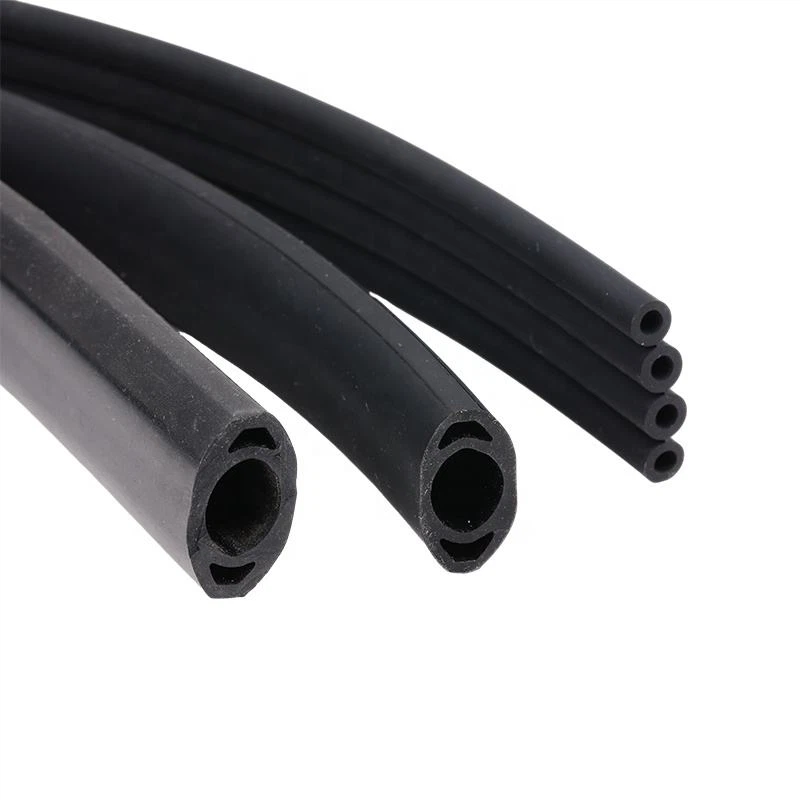


Flexibility and Conformability: Silicone seal strips exhibit exceptional flexibility, allowing them to conform easily to uneven surfaces and gaps of various shapes and sizes. This ensures a customized and effective seal along any contour.
Waterproof and Airtight Seal: Silicone seal strips create an impermeable barrier that effectively prevents the passage of air, water, insects, and other elements. They are rated to withstand immersion in water without compromising their sealing capabilities.
Durability and Damage Resistance: Manufactured using high-quality materials, silicone seal strips are built to last. They are resistant to damage caused by weather conditions, UV light exposure, and extreme temperatures, ensuring long-lasting performance.
Economical and Reusable: Silicone seal strips offer a cost-effective and reusable solution for sealing applications. Unlike conventional weatherstripping replacements or caulk, a single length of seal strip can be used to create multiple seals, minimizing waste and saving costs.
Ease of Application and Repositioning: Silicone seal strips are designed for easy application and can be repositioned or adjusted if necessary. They adhere strongly to most surfaces yet can be removed without leaving significant residue, making them a convenient and practical choice for sealing gaps and preventing air leaks.
Types of Silicone Seal Strips
Silicone seal strip come in various shapes and sizes to cater to different sealing requirements. The most common types include:
Flat Strips: These general-purpose seal strips are available in various widths and thicknesses, making them suitable for a wide range of sealing applications.
L-Shaped Strips: Designed for sealing corners and edges, L-shaped strips provide a snug fit and prevent gaps or leaks.
T-Shaped Strips: Ideal for sealing around pipes and other cylindrical objects, T-shaped strips create a secure and watertight seal.
Do You Know the Applications of Silicone Seal Strip?
The main function of the silicone seal strip is to seal, and the length of the sealing strip can be selected according to the place that needs to be sealed. Generally, there are many equipment or electrical appliances that can be sealed. Today, let's take a look at the application of silicone seal strip.
The main application of silicone seal strip are:
Door and window industry: With the change of human living environment, modern building doors and windows have gone through from steel doors and windows to plastic steel doors and windows, ordinary aluminum alloy doors and windows to broken bridge insulated doors and windows, system doors and windows, and building doors and windows. The development of the industry has driven the replacement of seal strip.
Transportation: Used in shipbuilding industry, marine silicone anti-vibration parts. Hydraulic system silicone seals, oil seals, automobile upper brake rubber caps, leather cups, and hoses. Foam seals, shaft seals of exhaust systems, spark plug sleeves, ignition wires, pistons, O-rings for dynamic rotary engines.
Silicone rubber sealing strips are used in radio, electrical and telecommunications industries; high-voltage caps for televisions and oscilloscopes. The silicone sealing ring and silicone insulating sleeve of the potentiometer. The shell of the thyristor tube, the gas sealing ring, the insulating sleeve, the switch guard, the electronic computer, the conductive rubber sheet on the telephone surface, the keyboard switch, the varistor, etc.
Therefore, when it comes to sealing strips, many people are already very familiar with it, because all aspects of life can be used. Due to some of its own characteristics, many industries are using it, and I believe the future development will get better and better.
With the development of society, silicone rubber sealing strips have been widely used in our daily lives and in the production activities of many enterprises. Its demand is also increasing year by year, which also prompts manufacturers to continuously improve their production technology to produce more products that meet the needs.
The Importance of Seal Shape In Compressibility


Compressibility refers to a material's compression ability under a compressive force. Regarding Silicone Strips, compressibility is a critical factor. It determines how well a rubber seal can conform to the sealing surface. It also determines how well a Silicone Strip can create a tight and effective seal. However, when a system compresses Silicone Strips, it creates a barrier between two surfaces. This barrier prevents the ingress of contaminants. Above all, the level of compressibility depends on the specific application and the rubber seal shape.
In specific, the relationship between rubber seal shapes and compressibility is critical. Different extruded rubber shapes determine their ability to compress to irregular surfaces. They aim to create a tight seal in the complex structure. The difference between using flat and rectangular Silicone Strips is the best example in this case. Flat Silicone Strips have lower compressibility than round or rectangular rubber seals. As a result, flat surfaces are only suitable for sealing a flat surface with another flat surface.
On the other hand, round and rectangular Silicone Strips have higher compressibility than flat Silicone Strips. They have more materials to compress and conform to different surfaces. This characteristic makes them suitable for applications on irregular surfaces. Sealing pipes, tubes, and HVAC systems are noteworthy examples. Moreover, other rubber seal shapes are also ideal for more complex sealing applications. Each of these shapes is suitable for unique and specific uses.
Shapes of Rubber Silicone Strip
Various rubber seal shapes are available in the market. Each of these shapes comes with unique benefits and drawbacks. These unique properties depend on the specific requirements of the application. Understanding these different extruded rubber shapes can help you choose suitable seal strips. The following four general types explain all the possible forms of seal strips. The typical materials used for these seal strips are rubber, silicone, neoprene, and EPDM.
Flat-shape seal strips: These rubber seal shapes are the most common. They are prevalent in applications requiring sealing a flat surface against another. Typical examples are doors, windows, and enclosures. Flat-shaped seal strips can be adhesive-backed or non-adhesive-backed.
Round shape seal strips: These rubber seal shapes are also popular as rubber cords. Rubber cords are typically used in sealing circular or curved surfaces. Rubber cords are prevalent in sealing pipes and tubes in industrial applications.
Rectangular shape seal strips: These rubber seals are generally used to seal gaps between two flat surfaces. Square rubber extrusions are typically wider than flat seal strips. It provides a more large sealing surface. These types of seal strips are common in refrigeration and HVAC systems.
Other rubber seal shapes: Many shapes and sizes exist except for the above three types. These shapes usually depend on specific use.
Sealing strips are used to fill the gaps between objects and play the roles of waterproofing, dustproof, sound insulation, and heat preservation. When installing sealing strips, there are some things to pay attention to:
Confirm the size and material of the sealing strip: Before installing the sealing strip, you need to select an appropriate sealing strip according to the size of the gap between objects and confirm the material of the sealing strip.
Clean the gap surface: Before installing the sealing strip, the gap surface needs to be cleaned to ensure that there is no dust, dirt, grease, etc. that will affect the sealing effect.
Allow an appropriate amount of compression: When installing the sealing strip, you need to allow an appropriate amount of compression to ensure that the sealing strip can fully fill the gap during use.
Avoid excessive compression: When installing the sealing strip, avoid excessive compression, otherwise it may cause the sealing strip to deform, break, or lose its sealing effect.
Pay attention to the installation sequence: When installing the sealing strip, you need to pay attention to the installation sequence. Start from one side and gradually install it to the other side to avoid gaps in the middle.
Use the correct tools: When installing the sealing strip, you need to use the correct tools, such as cutters, scrapers, glue guns, etc., to facilitate installation and ensure the sealing effect.
Pay attention to safety: When installing sealing strips, you need to pay attention to safety to avoid injuries or other safety hazards.
When installing the sealing strip, you need to pay attention to confirm the size and material of the sealing strip, clean the gap surface, leave an appropriate amount of compression, avoid excessive compression, pay attention to the installation sequence, use the correct tools and pay attention to safety.
Our Factory
Our products range from commercial grade silicone rubber sheet to Food grade silicone rubber sheet including silicone tube , we do also involves in other rubber sheet such as Natural rubber, SBR, NBR, EPDM which feature oil-resistance acid and alkali-resistance water proof fire-retardant, insulation,conductive and anti-slipping all the above grades are supplied in multiple colors in order to optimally meet our clients specific requests.

FAQ
Q: What is silicone seal strip used for?
Q: Why is silicone a useful sealing material?
Q: How do you apply sealant strips?
Q: How does silicone seal work?
Q: Will silicone seal when wet?
Q: When should you not use silicone sealant?
Q: How long does silicone seal last?
They prevent water from passing through and repel it to the outside. A silicone sealant can last anywhere from 10 to 20 years, depending on the quality chosen and the location of the caulking in relation to the elements, such as the sun and high winds. Silicone caulking offers the best resistance to UV rays.
Q: What are the pros and cons of silicone sealant?
Q: Does water leak through silicone?
Q: How waterproof is silicone sealant?
Q: Is silicone waterproof straight away?
Q: Where not to use silicone?
Q: What's better, silicone or caulk?
Q: Can I silicone over silicone?
Q: What is the best sealant to stop water leaks?
Q: Can silicone rubber withstand high temperature?
Q: What is the best rubber for high temperatures?
Silicone. Silicone is the number one extreme temperature rubber available. It offers outstanding high-temperature resistance, with some compounds able to withstand temperatures up to 305 °C.
Q: What rubber seals for high temperature?
Q: What rubber can withstand 500 degrees?
Silicone is the standard when considering a high-heat rubber material, as it can withstand operating temperatures up to 500 F before it starts to degrade. Fluorocarbons also withstand high operating heat up to 400 degrees.
Q: What is the maximum temperature for rubber sealing?
Hot Tags: silicone seal strip, China silicone seal strip manufacturers, suppliers, factory, silicone strip for removable applications, silicone strip for beginners, silicone strip for inspection, silicone strip for improvement, silicone strip for procurement, silicone strip for large scale production


