

What are the optical properties of medical silicone tubing?
Medical silicone tubing is a critical component in various healthcare applications, from simple fluid transfer to complex medical devices. Understanding its optical properties is essential for both medical device manufacturers and end - users. As a leading supplier of medical silicone tubing, we have in - depth knowledge of these properties and their implications in the medical field.
Transparency
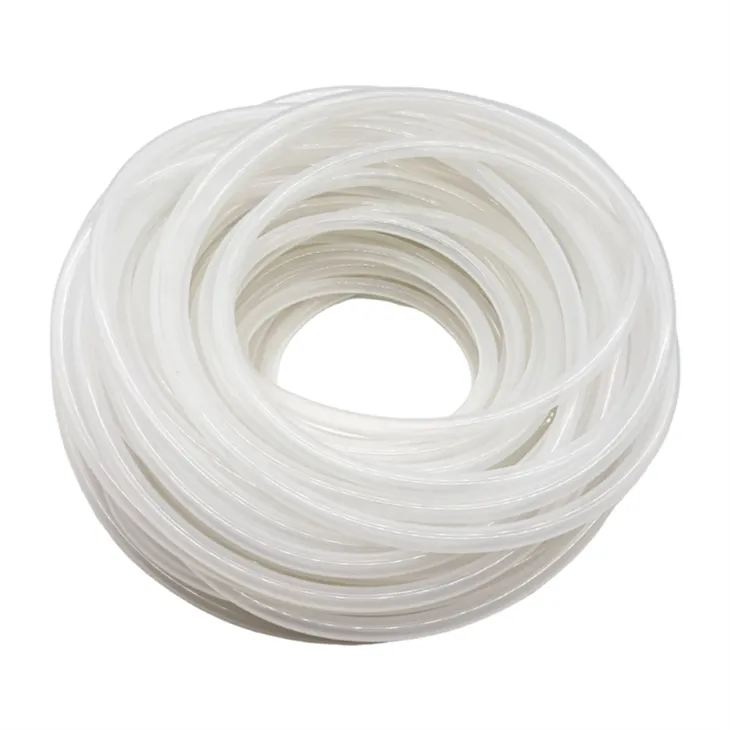
One of the most notable optical properties of medical silicone tubing is its transparency. Transparent medical silicone tubing allows for easy visual inspection of the fluid flowing through it. This is crucial in many medical procedures, such as intravenous (IV) therapy, where healthcare providers need to monitor the flow rate, check for air bubbles, and ensure the clarity of the administered fluid.
Our Medical Transparent Silicone Tubing is designed with high - grade silicone materials that offer excellent transparency. The clear view provided by this tubing helps in preventing potential complications, such as blockages or improper fluid delivery. Moreover, the transparency of the tubing remains stable over time, even when exposed to various medical fluids and environmental conditions. This is because the silicone used in our tubing has a high resistance to chemical degradation, which could otherwise cloud or discolor the tubing.
The manufacturing process of our transparent silicone tubing is carefully controlled to ensure uniform transparency throughout the length of the tube. Any irregularities in transparency could lead to misinterpretation of the fluid status during medical procedures. We use advanced extrusion techniques that allow for precise control of the tube's wall thickness and material distribution, resulting in a consistently clear and transparent product.
Coloration
In addition to transparent tubing, colored medical silicone tubing also has its own set of optical and practical advantages. For example, Red Silicone Tubing is often used to indicate specific types of fluids or to distinguish different lines in a medical setup. The bright red color is highly visible, making it easy for healthcare workers to quickly identify the relevant tubing in a complex medical environment.
Coloration in medical silicone tubing is achieved through the addition of safe and non - toxic pigments during the manufacturing process. These pigments are carefully selected to ensure that they do not leach into the fluids flowing through the tubing and do not compromise the biocompatibility of the silicone. The color of the tubing remains stable under normal medical use conditions, including exposure to light, heat, and various chemicals.
The optical properties of colored tubing also play a role in its identification under different lighting conditions. Our red silicone tubing, for instance, is designed to be clearly visible even in low - light environments, which is important in emergency situations or in areas with limited lighting.
Light Transmission and Absorption
The light transmission and absorption characteristics of medical silicone tubing are also important considerations. In some medical applications, such as photodynamic therapy or light - based diagnostic procedures, the tubing needs to have specific light - transmission properties.
Silicone has relatively good light - transmission capabilities in the visible light spectrum. However, the exact amount of light transmitted through the tubing depends on factors such as the tube's wall thickness, the presence of additives or pigments, and the type of silicone used. Our tubing can be customized to meet specific light - transmission requirements. For example, in applications where a high level of light transmission is needed, we can use silicone materials with low light - absorption coefficients and optimize the tube's wall thickness.
On the other hand, in some cases, it may be necessary to reduce light transmission to protect light - sensitive fluids or drugs. We can incorporate light - blocking additives into the silicone during the manufacturing process to achieve this. These additives are carefully formulated to ensure that they do not affect the other properties of the tubing, such as its flexibility, durability, and biocompatibility.
Refractive Index
The refractive index of medical silicone tubing is another important optical property. The refractive index determines how light bends when it passes through the tubing. This property can affect the way the tubing appears when viewed from different angles and can also impact the accuracy of visual inspections.

Our medical silicone tubing has a relatively stable refractive index, which is consistent across the entire length of the tube. This stability is important for accurate visual assessment of the fluid inside the tubing. Any variations in the refractive index could cause distortion or refraction of light, leading to inaccurate readings or misinterpretation of the fluid's appearance.
The refractive index of our tubing can be adjusted during the manufacturing process to meet specific application requirements. For example, in some optical - based medical devices, a specific refractive index may be needed to ensure proper light propagation and signal transmission.
Impact on Medical Applications
The optical properties of medical silicone tubing have a significant impact on its various medical applications. In diagnostic equipment, the transparency and light - transmission properties of the tubing are crucial for accurate detection and measurement. For example, in blood - gas analyzers, the tubing needs to be transparent enough to allow for clear visualization of the blood sample and to ensure accurate light - based measurements.
In surgical procedures, colored tubing can help in organizing and identifying different fluid lines, reducing the risk of errors. For instance, red tubing can be used for arterial blood lines, while blue tubing can be used for venous blood lines, making it easier for surgeons and nurses to quickly identify and manage the correct lines.
In drug delivery systems, the optical properties of the tubing can affect the stability and efficacy of the drugs. Light - sensitive drugs need to be protected from excessive light exposure, and tubing with appropriate light - blocking properties can help in maintaining the drug's integrity.
Quality Control and Assurance
As a supplier of medical silicone tubing, we have a rigorous quality control and assurance system in place to ensure that the optical properties of our tubing meet the highest standards. We use advanced optical measurement techniques, such as spectrophotometry, to accurately measure the transparency, light - transmission, and color stability of our tubing.
Every batch of tubing undergoes comprehensive testing before it is released to the market. We also conduct long - term stability studies to ensure that the optical properties of the tubing remain consistent over time. Our quality control team is highly trained and experienced in handling the unique challenges associated with the optical properties of medical silicone tubing.
Conclusion
The optical properties of medical silicone tubing, including transparency, coloration, light transmission and absorption, refractive index, play a vital role in its medical applications. As a leading supplier, we are committed to providing high - quality medical silicone tubing that meets the diverse optical requirements of the healthcare industry. Our Medical Transparent Silicone Tubing, Red Silicone Tubing, and Conductive Silicone Tube are all designed with careful consideration of these optical properties to ensure optimal performance in medical settings.
If you are in the market for medical silicone tubing and have specific optical requirements, we invite you to contact us for a detailed discussion. Our team of experts is ready to assist you in finding the perfect tubing solution for your medical applications.
References
- ASTM International. (20XX). Standard test methods for optical properties of plastics.
- ISO Standards. (20XX). Medical devices - General requirements for biocompatibility.
- Textbooks on medical materials science, discussing the properties of silicone in medical applications.