

Hey there! As a supplier of Silicone Sponge Strips, I've gotten a ton of questions about how these nifty strips perform in vacuum environments. So, I thought I'd dive into this topic and share some insights.
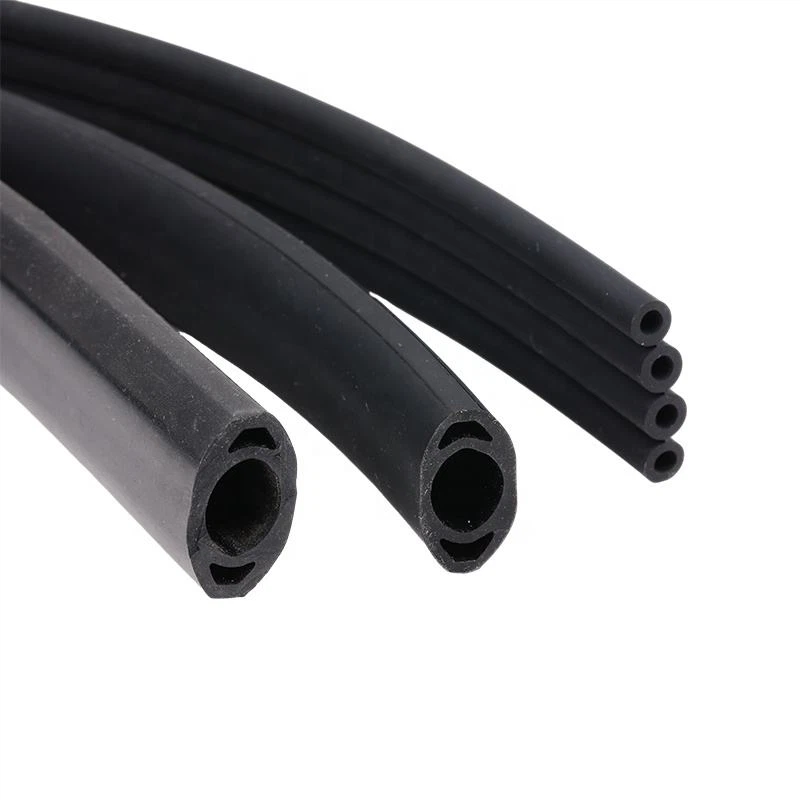
First off, let's talk a bit about what Silicone Sponge Strips are. They're these flexible and porous strips made from silicone rubber. You can check out more about them on our website: Silicone Sponge Strip. These strips have a bunch of great properties that make them useful in all sorts of applications, from sealing to cushioning.
Now, when it comes to vacuum environments, things can get a bit tricky. A vacuum is basically a space where there's very low pressure, almost no air molecules. This can have a big impact on how materials behave. So, how do Silicone Sponge Strips hold up?
One of the key things to consider is outgassing. Outgassing is when a material releases gas molecules when it's in a vacuum. This can be a problem because the released gases can contaminate the vacuum environment. Silicone Sponge Strips are pretty good in this regard. They have low outgassing properties, which means they don't release a whole lot of gas in a vacuum. This makes them suitable for use in sensitive applications where contamination is a concern, like in space equipment or semiconductor manufacturing.
Another important factor is compression set. Compression set is the ability of a material to return to its original shape after being compressed. In a vacuum environment, the lack of air pressure can cause materials to expand or contract. Silicone Sponge Strips have excellent compression set resistance. They can be compressed and then bounce back to their original shape, even after being in a vacuum for a long time. This is crucial for sealing applications, as it ensures a tight seal is maintained.
The flexibility of Silicone Sponge Strips also plays a big role in their performance in vacuum environments. They can easily conform to irregular surfaces, which is really handy when you need to seal a non - standard shape. This flexibility allows them to create a reliable seal, preventing air or other gases from leaking into the vacuum space.
Now, let's compare Silicone Sponge Strips with some other types of strips we offer. For example, Silicone Rubber Strips With Adhesive. These strips have an adhesive backing, which makes them easy to install. In a vacuum environment, the adhesive needs to be able to withstand the low - pressure conditions without losing its stickiness. Our Silicone Rubber Strips With Adhesive are designed to do just that. They have a strong adhesive that holds up well in vacuums, providing a secure attachment.
Then there are Special Shaped Silicone Strip. These strips are custom - made to fit specific shapes and sizes. In a vacuum, their unique shapes can be used to create more complex sealing solutions. For instance, in a piece of equipment with a strange - shaped opening, a Special Shaped Silicone Strip can be designed to fit perfectly, ensuring an airtight seal.
When it comes to temperature, Silicone Sponge Strips are pretty versatile. Vacuum environments can have extreme temperatures, either very hot or very cold. Silicone has a wide temperature range, from - 60°C to 200°C or even higher in some cases. This means that Silicone Sponge Strips can maintain their properties in both high - and low - temperature vacuum conditions. They won't become brittle in the cold or melt in the heat, which is a huge advantage.
In addition to their physical properties, Silicone Sponge Strips are also chemically resistant. In a vacuum environment, there might be some residual chemicals or reactive gases. Silicone is resistant to many chemicals, which means the strips won't degrade easily when exposed to these substances. This chemical resistance adds to their durability and reliability in vacuum applications.
So, to sum it up, Silicone Sponge Strips perform really well in vacuum environments. Their low outgassing, excellent compression set resistance, flexibility, temperature tolerance, and chemical resistance make them a top choice for a wide range of vacuum - related applications.
If you're in the market for Silicone Sponge Strips or any of our other silicone strips, we'd love to hear from you. Whether you're working on a space project, a semiconductor manufacturing line, or any other application that requires reliable sealing in a vacuum, we can provide the right products for you. Just reach out to us to start a conversation about your specific needs.
References:

- "Handbook of Silicone Rubber" - A comprehensive guide on silicone rubber properties and applications.
- Industry research reports on materials used in vacuum environments.