

Hey there! As a supplier of thin silicone sheets, I often get asked about the refractive index of these nifty materials. So, let's dive right in and break it down.
First off, what's the refractive index anyway? Well, it's a measure of how much a ray of light bends when it passes from one medium (like air) into another (in this case, our thin silicone sheet). It's basically a number that tells us how much the speed of light changes as it moves through different substances. The formula for refractive index (n) is the speed of light in a vacuum (c) divided by the speed of light in the material (v), so n = c/v.
Now, the refractive index of a thin silicone sheet can vary depending on a few factors. One of the main things is the composition of the silicone. Silicone is a synthetic polymer made up of silicon, oxygen, carbon, and hydrogen. Different manufacturers might use slightly different recipes, adding in various additives or fillers to give the silicone specific properties like heat resistance, flexibility, or electrical insulation. These additives can affect the way light interacts with the silicone, and thus, change the refractive index.
Typically, the refractive index of pure silicone rubber is around 1.4 - 1.5. But when we're talking about thin silicone sheets, things can get a bit more complicated. For example, if the sheet has a special coating or treatment, that can alter the refractive index. Also, the thickness of the sheet can play a role. In very thin sheets, the surface effects become more significant. Light might interact differently with the top and bottom surfaces of the sheet compared to a thicker piece of silicone.

Let's talk about some of the different types of thin silicone sheets we offer. We've got the Insulating Silicone Rubber Sheet. These sheets are great for electrical applications where you need to insulate components from electricity. The additives used to make them good insulators can also have an impact on the refractive index. They might scatter light a bit more, which could change the overall way light passes through the sheet.
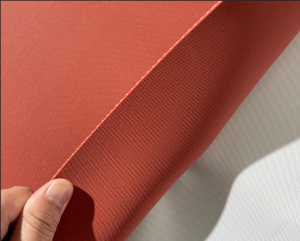
Then there's the Cloth Pattern Silicone Sheet. These sheets have a unique texture because of the cloth pattern. This pattern can cause light to reflect and refract in different directions, creating interesting optical effects. The refractive index here might not be as straightforward to measure as in a smooth, plain silicone sheet. The cloth pattern adds an extra layer of complexity to how light behaves within the material.
And of course, we can't forget about the Transparent Silicone Rubber Sheet. These are the ones where the refractive index really matters if you're using them for optical applications. For instance, if you're making a lens or a light diffuser, you want to know exactly how the light will bend as it passes through the sheet. A consistent refractive index is crucial for getting the desired optical performance.
Measuring the refractive index of a thin silicone sheet isn't always a walk in the park. There are a few different methods we can use. One common way is the prism method. You take a small sample of the silicone sheet and shape it into a prism. Then, you shine a beam of light through the prism at a specific angle and measure how much the light bends. By using Snell's law, which relates the angles of incidence and refraction to the refractive indices of the two media, you can calculate the refractive index of the silicone.
Another method is the interferometry method. This involves creating an interference pattern with light waves passing through the silicone sheet. By analyzing the pattern, you can figure out the optical path length of the light in the sheet, which is related to the refractive index.
Why does the refractive index matter for thin silicone sheets? Well, if you're in the optical industry, it's super important. For example, in the production of LED lights, you might use a thin silicone sheet as a light diffuser. The refractive index determines how the light spreads out, and getting it right can make the difference between a harsh, uneven light and a soft, uniform glow.
In the medical field, thin silicone sheets are sometimes used in optical devices like endoscopes. The refractive index affects how clearly the device can transmit images, so it's crucial to have a material with the right optical properties.
Even in the electronics industry, the refractive index can be relevant. When you're designing displays or touchscreens, the way light passes through the protective silicone layer can impact the visibility and clarity of the screen.
If you're in the market for thin silicone sheets and you're concerned about the refractive index, we're here to help. We can provide you with detailed information about the refractive index of our different products. Our team of experts can also work with you to understand your specific requirements and recommend the best type of silicone sheet for your application.
Whether you need a sheet with a high refractive index for a particular optical effect or a sheet with a consistent refractive index for a precision application, we've got you covered. We pride ourselves on offering high - quality thin silicone sheets that meet the diverse needs of our customers.
So, if you're interested in learning more or want to start a purchase negotiation, don't hesitate to reach out. We're always ready to have a chat and find the perfect thin silicone sheet solution for you.
References
- "Introduction to Optics" by Frank L. Pedrotti, Leno S. Pedrotti, and Leno M. Pedrotti
- "Silicone Elastomers: Science and Technology" by Alan L. Smith